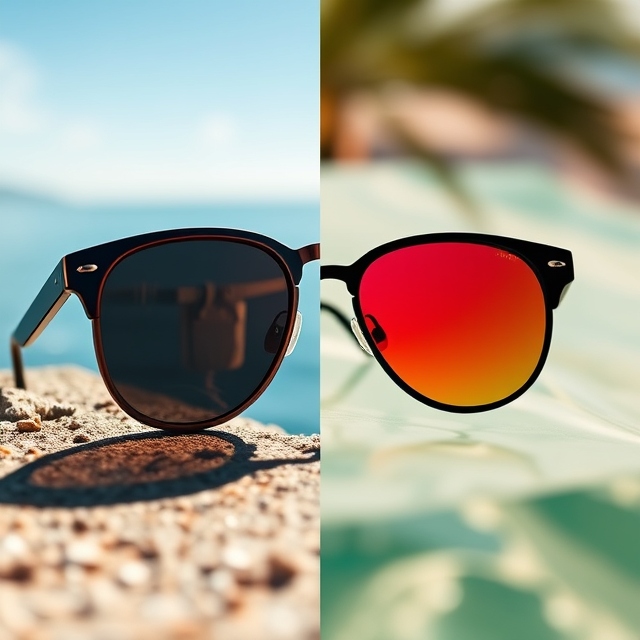
When comparing polarized vs tinted sunglasses, it helps to understand that polarization and tint serve different purposes. A lens can be tinted for appearance or light filtering, while polarization is a specific lens technology designed to reduce certain types of reflected glare.
That distinction matters when choosing sunglasses for driving, outdoor activities, everyday wear, or fashion. The right option depends on what you want the lenses to do as well as how you want the sunglasses to look.
What Are Tinted Sunglasses?
Tinted sunglasses use lenses with a color or shade that changes the amount and character of light passing through them. Tints can be grey, brown, green, yellow, blue, or other colors depending on the design and intended effect.
A tint can serve several purposes. It may reduce overall brightness, alter the visual appearance of the environment, or simply contribute to the aesthetic character of the sunglasses.
For fashion-focused eyewear, lens tint can also become a major part of the design. Lightly tinted lenses may create a subtle look, while darker or more colorful lenses can make a frame more distinctive.
However, a lens being dark or colorful does not automatically mean it is polarized.
What Are Polarized Sunglasses?
Polarized sunglasses use a specialized filter designed to reduce certain forms of glare, particularly reflected glare from surfaces such as roads, water, and other relatively flat surfaces.
Reflected light can become intensely bright and uncomfortable in certain outdoor conditions. Polarization helps filter some of that horizontally oriented reflected light before it reaches the eyes.
This makes polarized lenses particularly relevant for activities where glare is a significant concern, including driving, boating, fishing, and spending extended periods outdoors.
Polarization is therefore a functional lens feature rather than simply a lens color.
Polarized vs Tinted Sunglasses: The Main Difference
The simplest distinction is this:
Tint changes the amount or character of light entering the eyes, while polarization is designed to reduce specific reflected glare.
A tinted lens can be polarized, too. These features are not necessarily alternatives.
For example, a pair can have brown-tinted polarized lenses. The brown tint affects the lens appearance and light transmission, while the polarization provides glare-filtering properties.
This is why asking whether sunglasses are polarized or tinted can sometimes create a false either-or comparison. They describe different aspects of lens design.
When Are Tinted Lenses Useful?
Tinted lenses can be useful when appearance and general light filtering are important.
A grey tint can provide a neutral visual character, while brown or amber tones can create a warmer appearance. Fashion sunglasses may also use blue, green, yellow, pink, or other tints to create a distinctive look.
Tint is especially relevant when choosing sunglasses as part of an outfit. The combination of frame color, frame shape, and lens tint can create a very different overall impression.
For example:
- Grey tint: understated and neutral.
- Brown tint: warm and classic.
- Green tint: distinctive while remaining relatively traditional.
- Blue tint: cool and fashion-forward.
- Yellow or amber tint: noticeably warm and expressive.
The actual optical properties of a lens depend on its construction, not simply its visible color.
When Does Polarization Make More Sense?
Polarization is particularly useful when reflected glare is a major part of the environment.
Drivers may encounter glare from roads and vehicles. People near water may experience intense reflections from the surface. Outdoor activities can also expose the eyes to bright reflected light.
In these situations, polarization can provide a functional advantage that ordinary tint alone does not necessarily provide.
However, polarization is not automatically necessary for every pair of sunglasses. If your primary goal is an accessory that complements an outfit, lens appearance and frame design may be more important.
Can Sunglasses Be Both Polarized and Tinted?
Yes. Sunglasses can combine polarization with a colored lens tint.
This combination can provide both a particular visual appearance and glare-filtering functionality. For shoppers, that means the choice does not always need to be between fashion and function.
When considering a pair of Donahugh sunglasses, for example, it can be useful to evaluate the complete lens and frame design rather than judging the sunglasses solely by whether the lenses look dark or colorful.
Does Darker Mean Better Sun Protection?
No. Lens darkness by itself does not tell you whether sunglasses provide adequate protection from ultraviolet radiation.
A visibly dark lens and UV protection are separate characteristics. A lens can appear relatively light while still being designed to provide UV protection, while a very dark-looking lens should not be assumed to provide protection simply because of its appearance.
When buying sunglasses, check the manufacturer’s stated protection specifications rather than using lens darkness as a shortcut.
What Should You Choose for Driving?
For driving, glare management, visual clarity, and appropriate lens characteristics are important considerations.
Polarized lenses may reduce certain reflections from roads and other surfaces, which can be useful in bright conditions. However, drivers should also consider how a particular lens interacts with displays, instrument panels, and other visual information in their vehicle.
Tint color and darkness can affect how the environment appears, so the lens should provide comfortable visibility without unnecessarily reducing useful contrast.
What Should You Choose for Everyday Fashion?
For everyday fashion, tinted lenses may offer more flexibility if your main goal is visual styling.
A retro frame with lightly colored lenses can create a subtle vintage-inspired effect. Dark lenses can make the same silhouette feel more dramatic, while unusual tints can turn the sunglasses into a statement accessory.
If you want both fashion and glare reduction, look for a design that combines an appealing tint with polarization rather than assuming you must choose one feature.
A Quick Comparison
| Feature | Tinted Lenses | Polarized Lenses |
|---|---|---|
| Changes lens color | Yes | Not necessarily |
| Reduces general brightness | Depending on tint | Depending on lens tint |
| Reduces reflected glare | Not specifically | Yes, for suitable reflected glare |
| Can be used for fashion | Yes | Yes |
| Can be combined with the other feature | Yes | Yes |
| Suitable for outdoor glare | Depends on lens | Often useful |
The most important point is that polarization and tint describe different properties. One concerns glare filtering, while the other primarily concerns the lens’s visual and light-filtering characteristics.
How to Choose the Right Sunglasses
Start by identifying how you expect to use the sunglasses.
If you spend significant time around reflective surfaces, polarization may be worth considering. If you primarily want sunglasses that complement different outfits, lens tint and frame design may have greater importance.
Then consider the frame itself. Shape, width, material, color, and lens size all influence how the sunglasses look and fit.
Finally, check the product specifications instead of relying on appearance alone. Understanding the difference between lens tint, polarization, UV protection, and frame design makes it easier to choose sunglasses based on actual needs rather than marketing language.
The best pair is not necessarily the darkest or most colorful. It is the one whose lens features, frame construction, fit, and appearance match how you intend to wear it.