Causation in personal injury cases refers to the legal connection between a defendant’s conduct and the injuries an individual claims to have suffered. In a negligence case, establishing that someone acted carelessly is not enough. The injured person must also demonstrate that the alleged negligence caused the harm in a legally recognized way.
For example, a driver may violate a traffic rule, but that violation does not automatically establish responsibility for every injury associated with an accident.
The evidence must connect the conduct to the particular harm.
Understanding causation helps explain why accident investigations, medical records, and the sequence of events are important in personal injury litigation.
What Is Causation in Personal Injury Cases?
Causation is an essential element of negligence that examines whether the defendant’s breach of duty caused the plaintiff’s injury.
In many cases, courts consider two related concepts:
- Actual cause: Whether the defendant’s conduct was a factual cause of the injury.
- Proximate cause: Whether the injury was sufficiently connected to the conduct to justify legal responsibility.
These concepts serve different purposes.
Actual cause focuses on the factual relationship between conduct and harm.
Meanwhile, proximate cause addresses the legal limits of responsibility.
Therefore, both may be important when determining whether an injury claim can succeed.
Understanding Actual Causation in Injury Claims
Actual cause is sometimes described using the but-for test.
This test asks whether the injury would have occurred without the defendant’s alleged negligent conduct.
For example, suppose a driver fails to stop at a red traffic signal and collides with another vehicle.
If the collision and resulting injuries would not have occurred without that conduct, the driver’s actions may qualify as an actual cause.
However, not every case involves a straightforward sequence of events.
Some accidents involve multiple contributing factors, making factual causation more complicated.
Consequently, courts may need to evaluate additional evidence and applicable causation principles.
What Is Proximate Causation in Personal Injury Cases?
Proximate cause concerns whether the connection between negligent conduct and an injury is sufficiently direct under the law.
It helps establish reasonable limits on legal responsibility.
For example, a dangerous condition on a property may lead directly to a visitor falling and suffering an injury.
In that situation, the relationship between the hazard and the injury may support a finding of proximate cause.
However, an unusual sequence of independent events may raise questions about whether the original conduct remains a legally sufficient cause.
Courts consider the circumstances and relevant legal standards when evaluating these issues.
How Is Causation Proven in Personal Injury Cases?
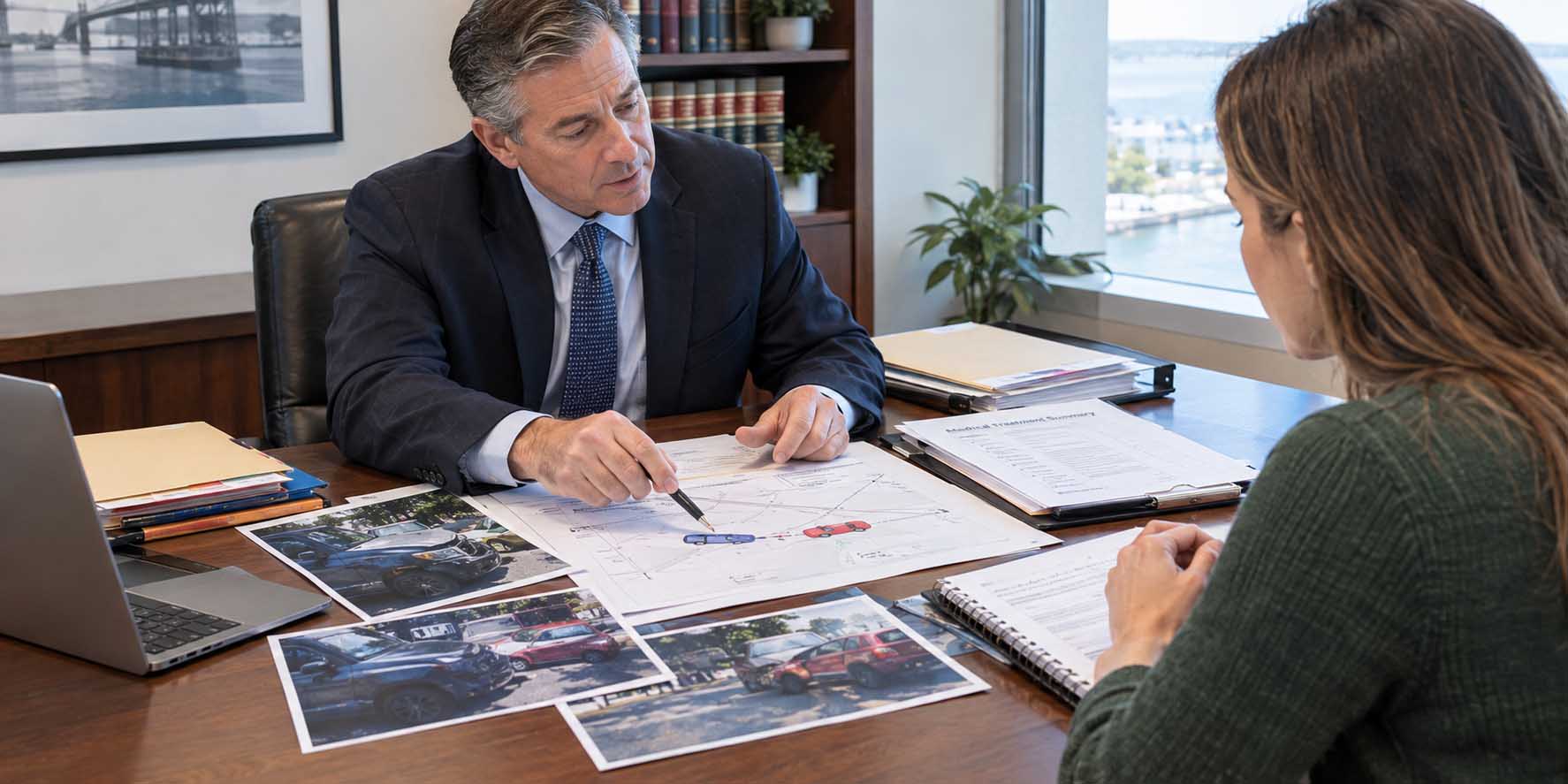
Establishing causation often requires evidence showing how an accident occurred and how the resulting injuries developed.
Different types of documentation may help explain the connection between the incident and the claimed harm.
Accident Evidence and Documentation
Photographs, incident reports, witness statements, and video recordings may help establish the sequence of events.
For example, surveillance footage could show whether a hazardous condition contributed to a fall.
However, investigators and attorneys must evaluate such evidence in context.
Medical Records and Injury Causation
Medical documentation may help establish the nature of an injury and its relationship to the incident.
Relevant records can include emergency treatment notes, diagnostic findings, specialist evaluations, and follow-up appointments.
However, the timing of medical treatment alone does not necessarily prove causation.
Expert Testimony in Injury Claims
Some claims involve medical or technical questions requiring specialized knowledge.
For example, a medical expert may evaluate whether a particular accident mechanism could have caused a diagnosed injury.
Similarly, an accident reconstruction professional may analyze physical evidence from a collision.
The need for expert testimony depends on the issues involved.
Understanding Causation Under New York Personal Injury Law
New York negligence law generally requires a legally sufficient connection between the defendant’s breach of duty and the plaintiff’s injuries.
However, the appropriate analysis depends on the type of accident, available evidence, and applicable legal standards.
The New York State Unified Court System’s Pattern Jury Instructions provide guidance on legal principles that courts use when instructing juries, including negligence and causation.
Individuals researching Siben & Siben personal injury practice can find information about personal injury legal services available through the Bay Shore, New York, law firm.
For someone injured in Nassau County or Suffolk County, a legal consultation may help clarify which facts are relevant to proving causation.
The existence of an injury does not automatically establish that another person’s negligence caused it.
Can Multiple Parties Contribute to Injury Causation?
Yes. An accident may involve several contributing causes.
For example, a collision might involve one driver failing to yield while another driver travels at an unsafe speed.
Both actions could potentially contribute to the resulting injuries.
However, determining legal responsibility requires examining each party’s conduct and its causal relationship to the harm.
New York’s comparative negligence principles may also affect the allocation of responsibility and recoverable damages.
Therefore, the presence of multiple contributing factors does not necessarily eliminate a personal injury claim.
How Do Pre-Existing Conditions Affect Causation?
A pre-existing medical condition can make causation more complicated, but it does not automatically prevent an injured person from pursuing a claim.
For example, someone with an existing back condition may experience additional symptoms following a vehicle collision.
The legal question may involve whether the accident caused a new injury or aggravated an existing condition.
Medical records and professional evaluations may help distinguish previous symptoms from accident-related changes.
However, appropriate evidence must support the extent of any aggravation.
What Happens When Injury Causation Cannot Be Established?
A negligence claim may fail if the injured person cannot establish a legally sufficient connection between the alleged breach and the injury.
For example, evidence might show that a defendant acted carelessly without demonstrating that the conduct caused the harm the plaintiff claims.
Similarly, medical evidence may not support the asserted relationship between an incident and a particular condition.
Therefore, proving negligent conduct alone is generally insufficient.
Courts must consider causation alongside duty, breach, and damages.
Why the Timeline of an Injury Matters
A clear chronology can help explain how an accident and subsequent medical developments relate to each other.
Useful information may include:
- The date and circumstances of the accident
- Symptoms the injured person reported immediately afterward
- Initial medical evaluations
- Diagnostic testing
- Changes in symptoms over time
- Follow-up treatment
- Relevant previous medical conditions
However, delayed symptoms do not automatically establish or disprove causation.
The significance of the timeline depends on the injury, medical findings, and surrounding circumstances.
Final Thoughts
Understanding causation in personal injury cases helps determine whether negligent conduct has a legally sufficient connection to a person’s injuries.
Actual cause examines the factual relationship between conduct and harm, while proximate cause addresses the legal limits of responsibility.
Because these questions can involve complex evidence, accident documentation, medical records, and appropriate professional evaluations may be important.
Understanding causation allows injured individuals to better recognize the evidence and legal questions involved when evaluating a potential personal injury claim.